Honeycrisp
2025
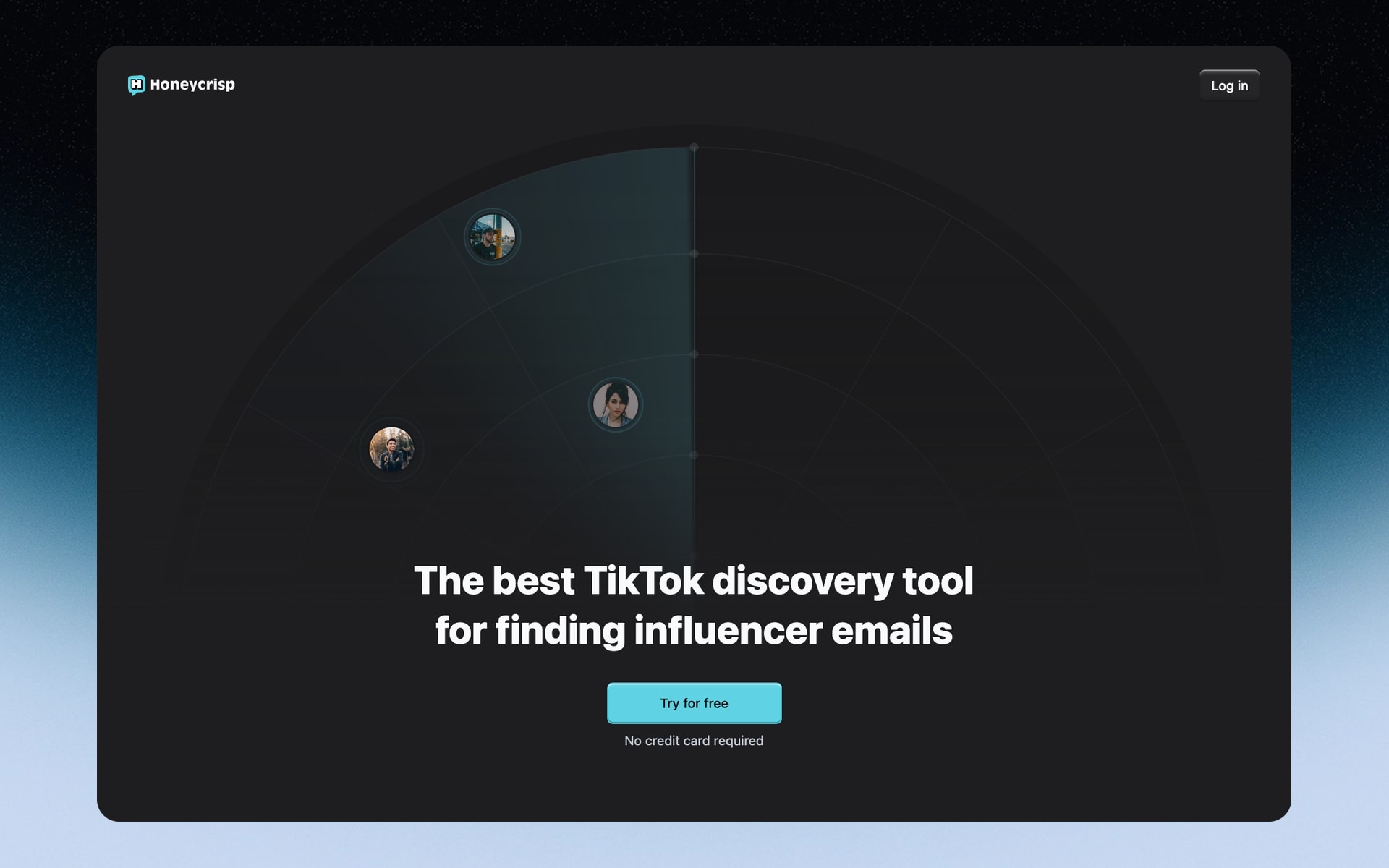
Honeycrisp helps brands find and contact TikTok creators. I designed the product, website, and brand, and built some parts of the product.
Here's a brief overview of how I used AI to improve the onboarding flow.
Problem
Insights from user research revealed that people often didn't know which keywords to search for on TikTok.
The first search was a key part of onboarding. I needed to help people choose useful keywords so they could start finding creators.
Attempt #1
My first approach was to start with something people already knew: their own brand. I designed an onboarding flow that asked them to describe their brand or product, then used an LLM to turn that description into suggested keywords.
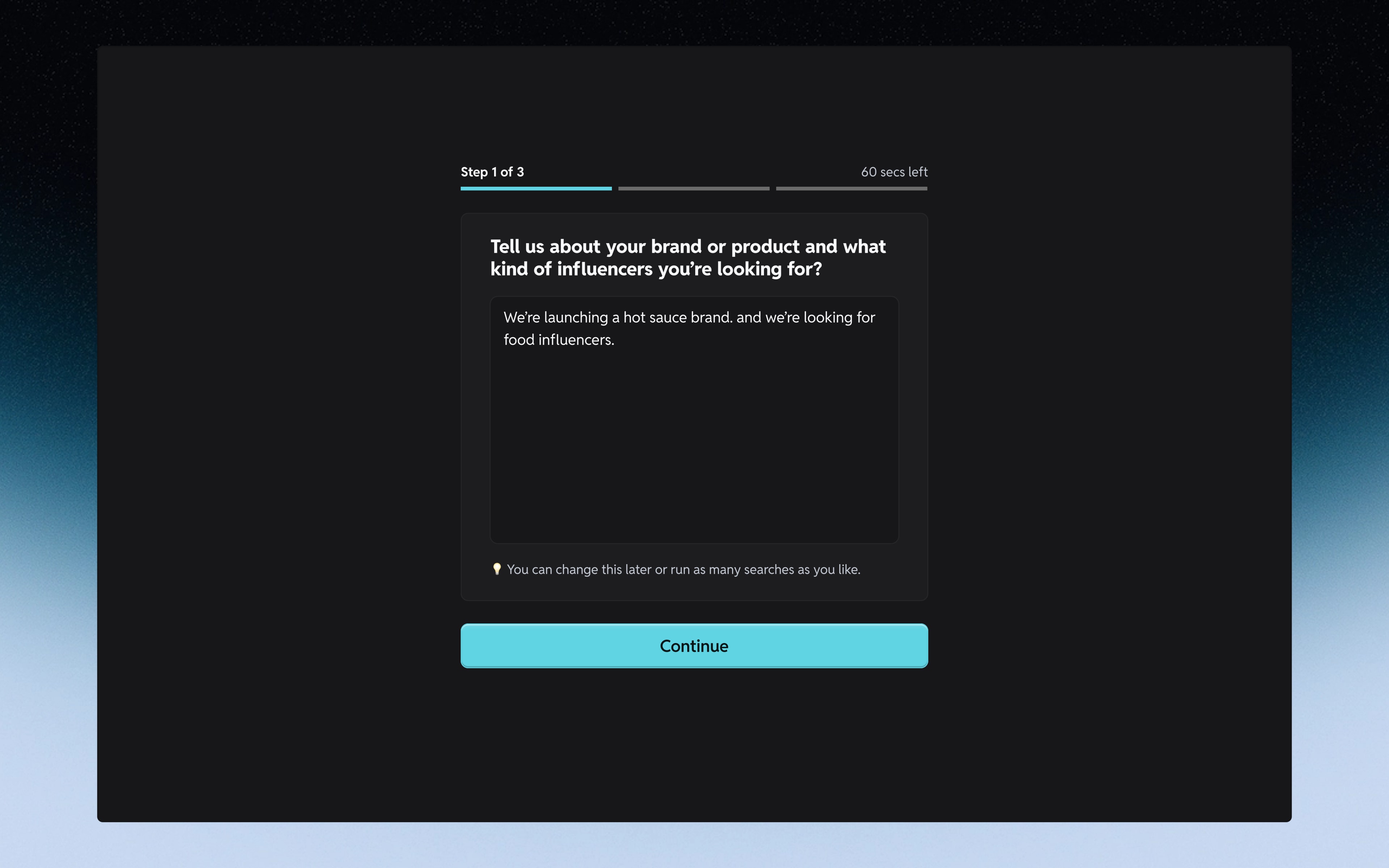
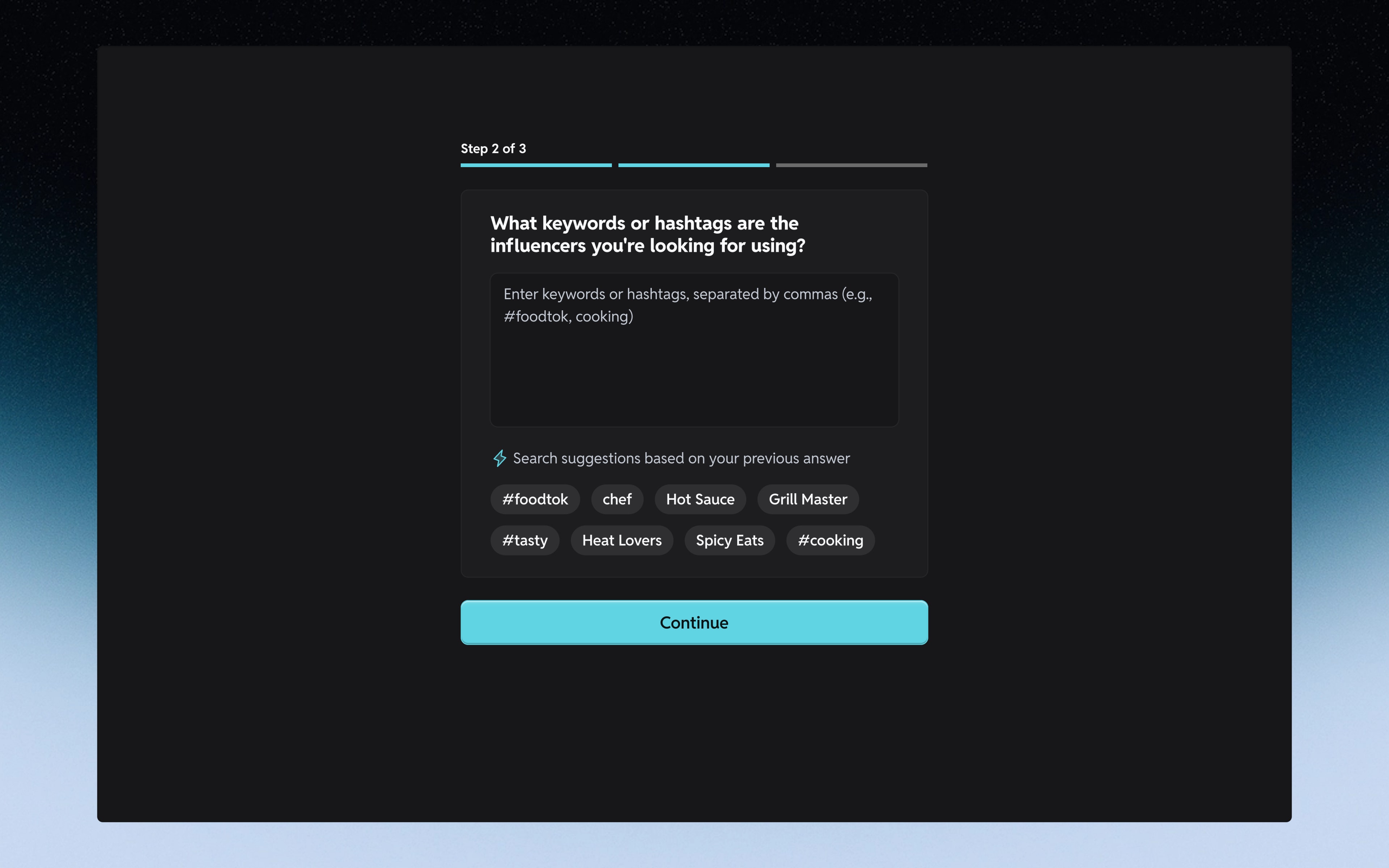
This gave people a starting point, but it depended on two things that proved difficult. People struggled to describe their business clearly, and most of the generated keywords didn't match what people actually used on TikTok. The flow could produce suggestions, but searches still often returned poor results.
Attempt #2
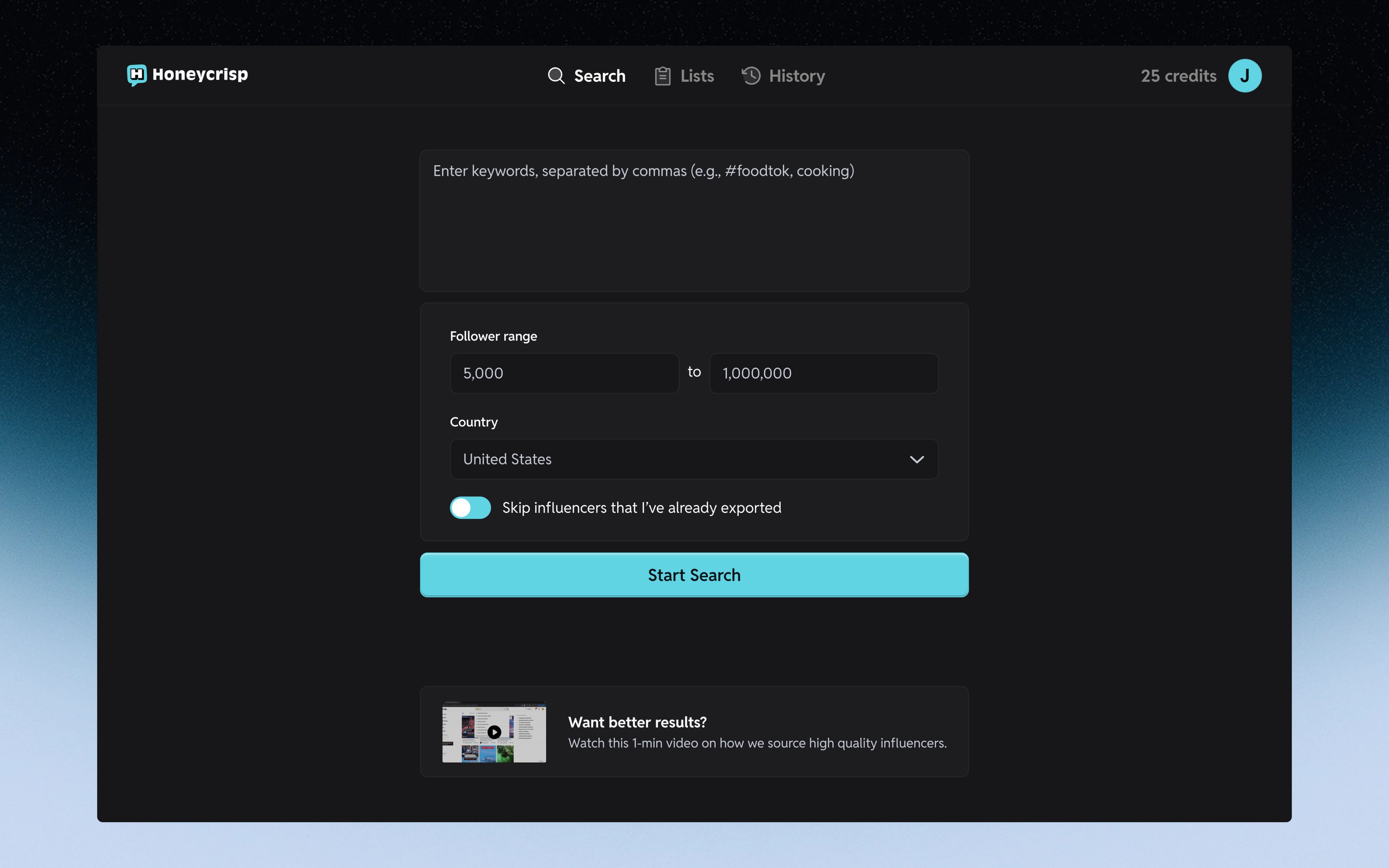
Since generated suggestions weren't reliable, I tried helping people find keywords themselves. I let them go straight to search and added a short video showing how to find useful keywords on TikTok.
For people who weren't ready to search, I added curated creator lists (opens in a new tab). They could choose a topic and browse creators without first having to choose keywords.
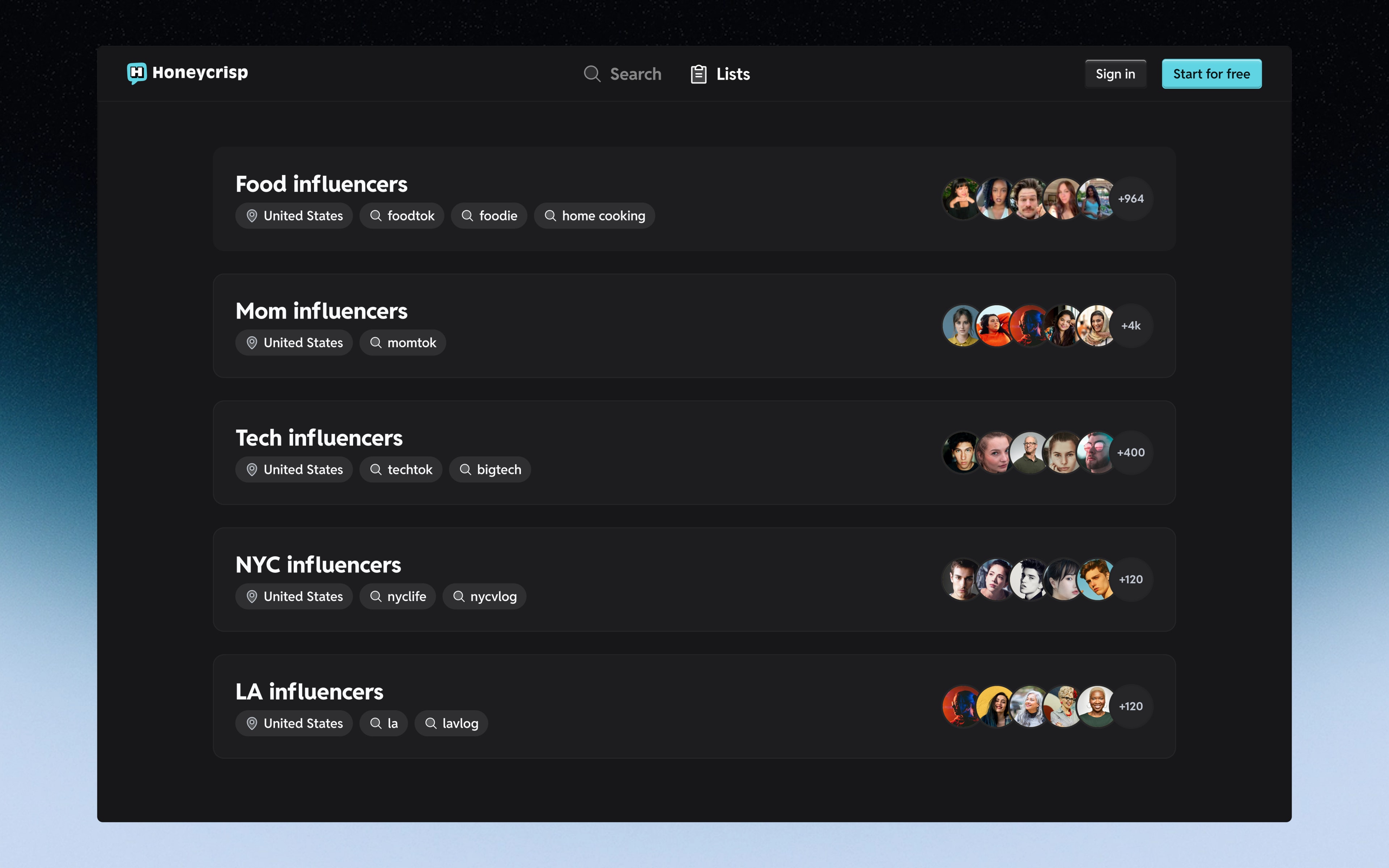
The lists offered a way to start, but a custom search still required people to find their own keywords. The next attempt needed to bring both parts together: an accurate picture of the brand and keywords people actually used on TikTok.
This walkthrough shows the first two onboarding attempts.
Attempt #3
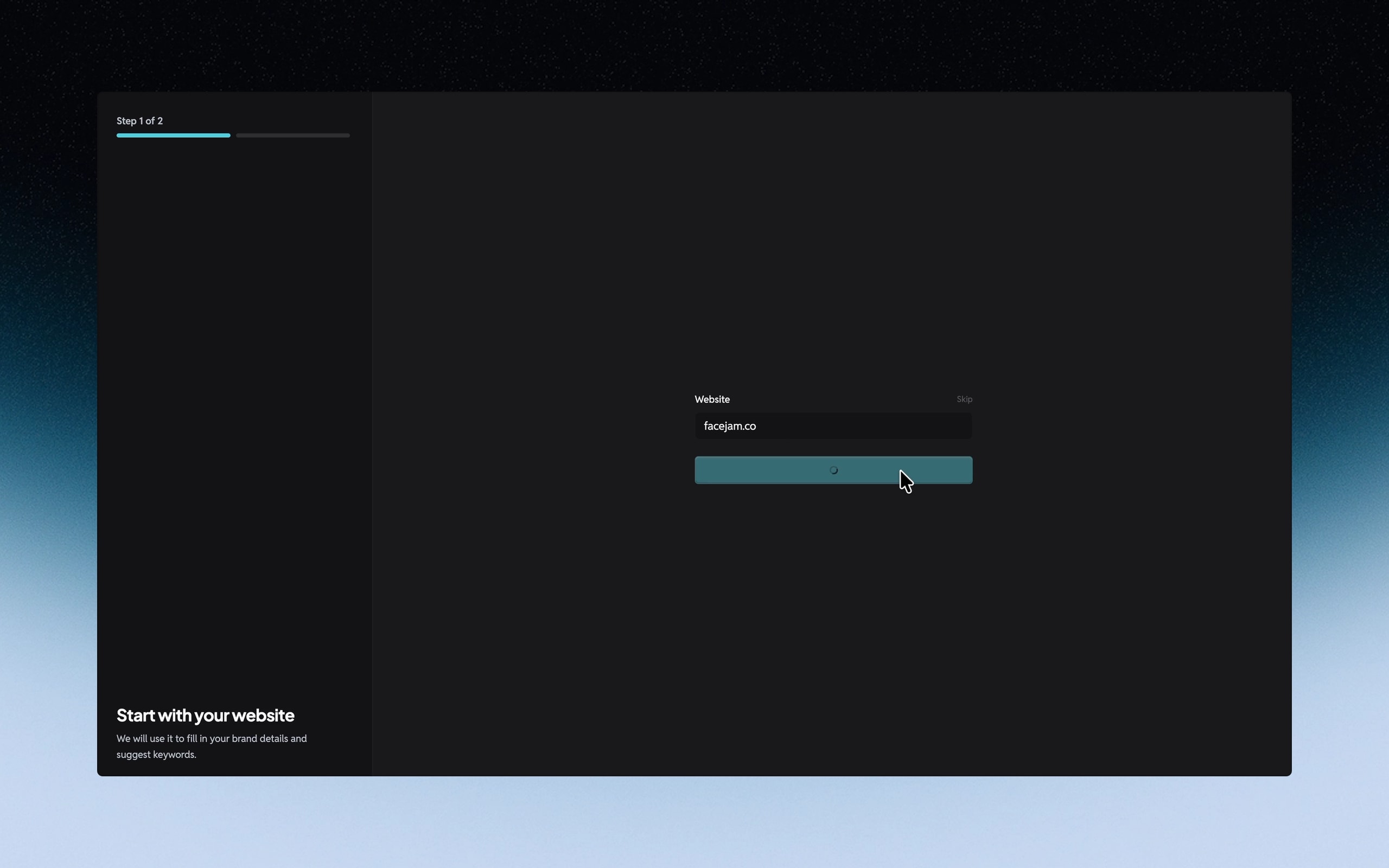
I returned to the brand description. A brand's website already held much of the information we were asking people to write. I researched ways to use it and prototyped a few ideas in code, then used Context.dev (opens in a new tab) to pull brand details from the website.
Onboarding became two steps: enter a website, then review the details. People could correct an existing description instead of writing one from scratch, and I had more accurate brand information to use for suggestions.
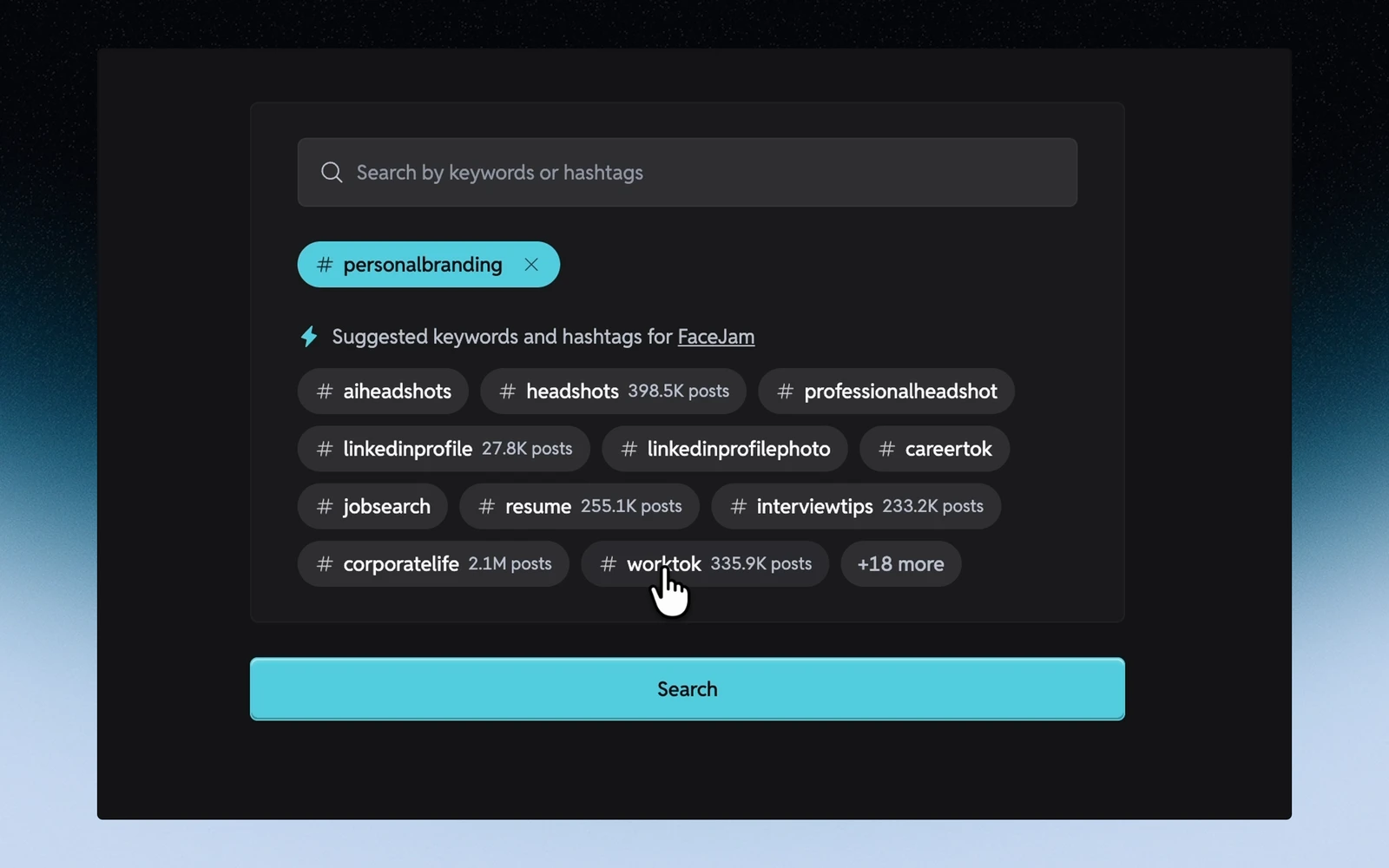
That addressed the first problem. To address the second, I built a scraper to collect live TikTok keywords and count their posts. Suggestions could now draw on keywords used on TikTok, with post counts shown beside them.
People could see how much content was available before choosing a keyword.
Early explorations
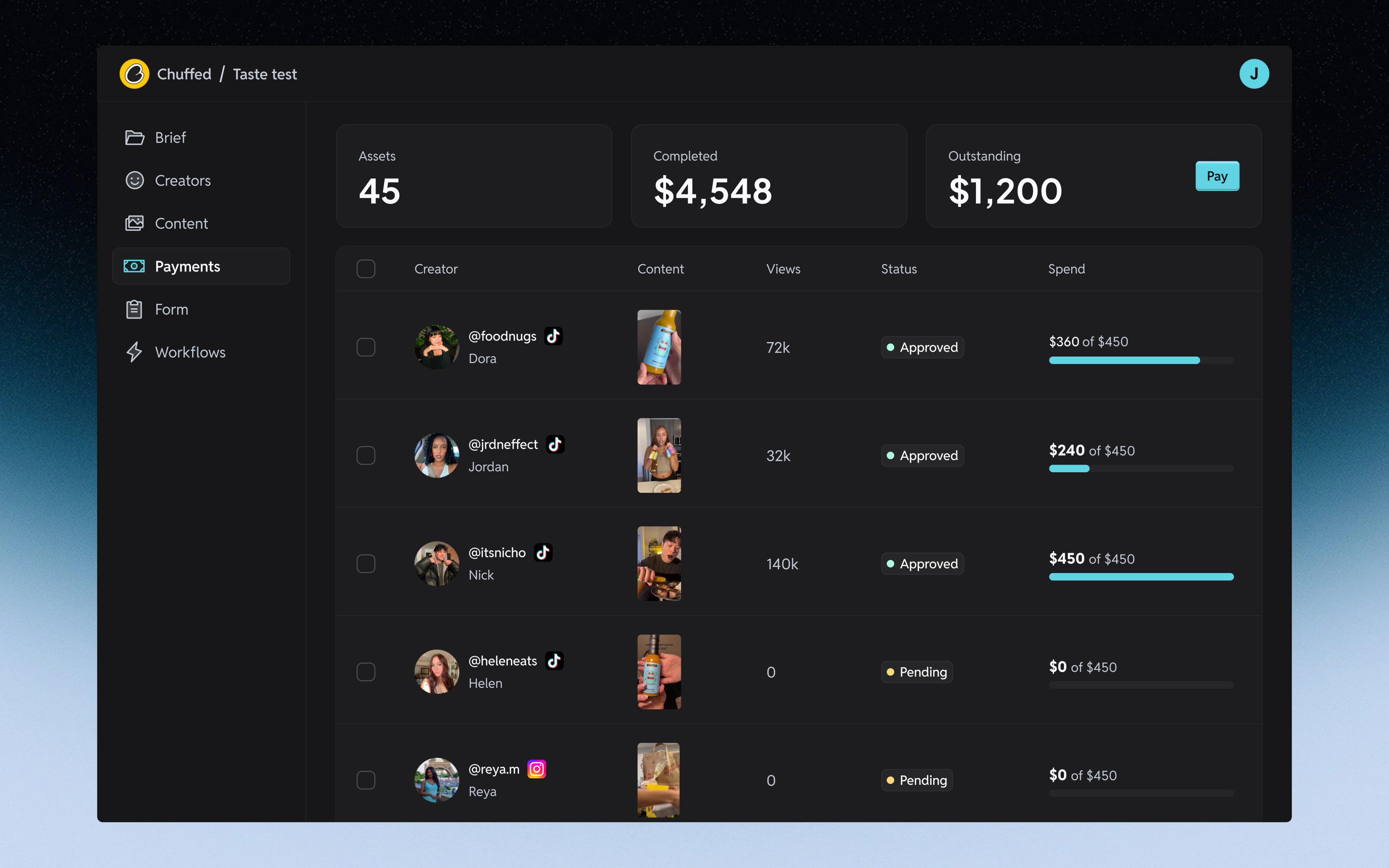
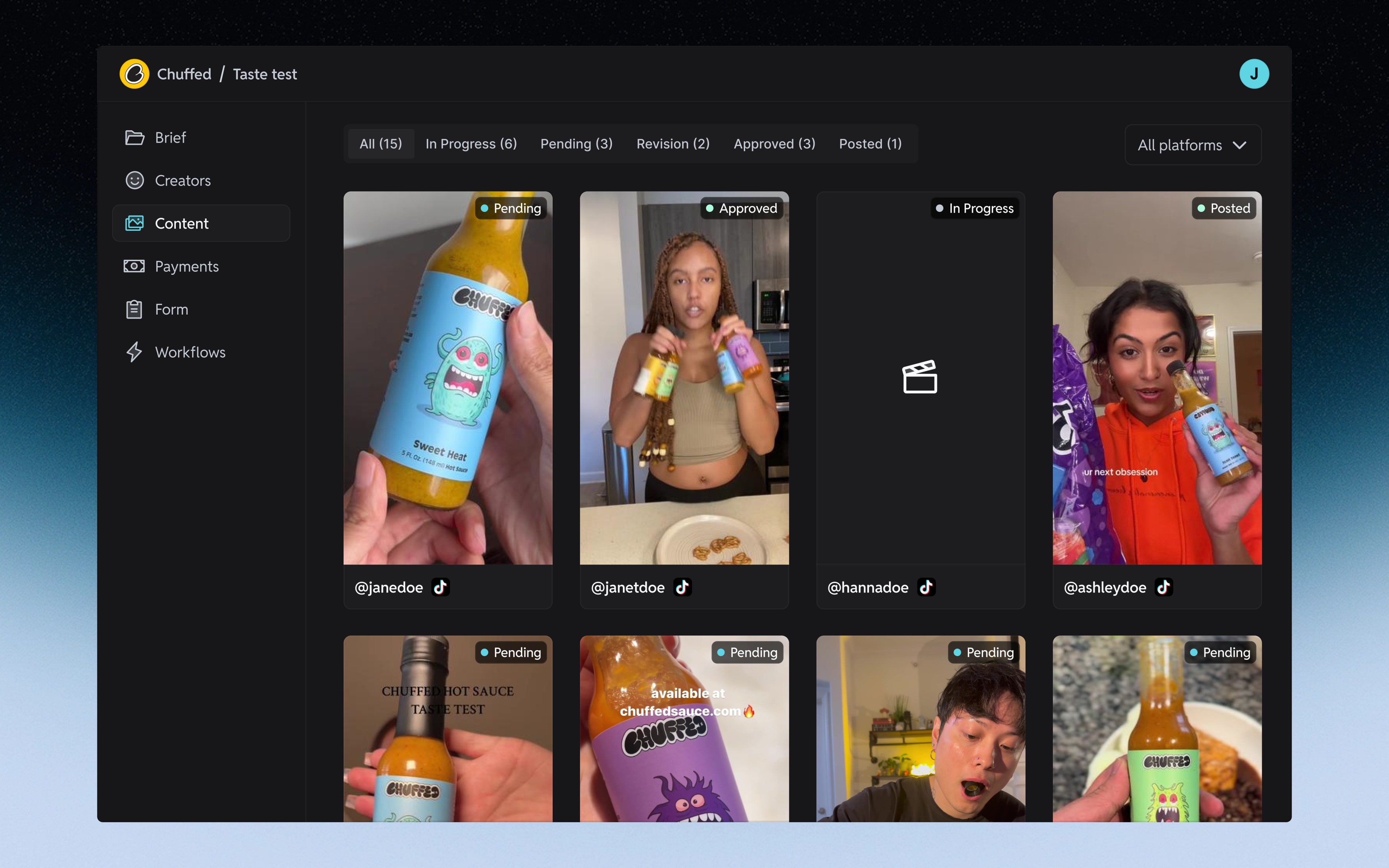
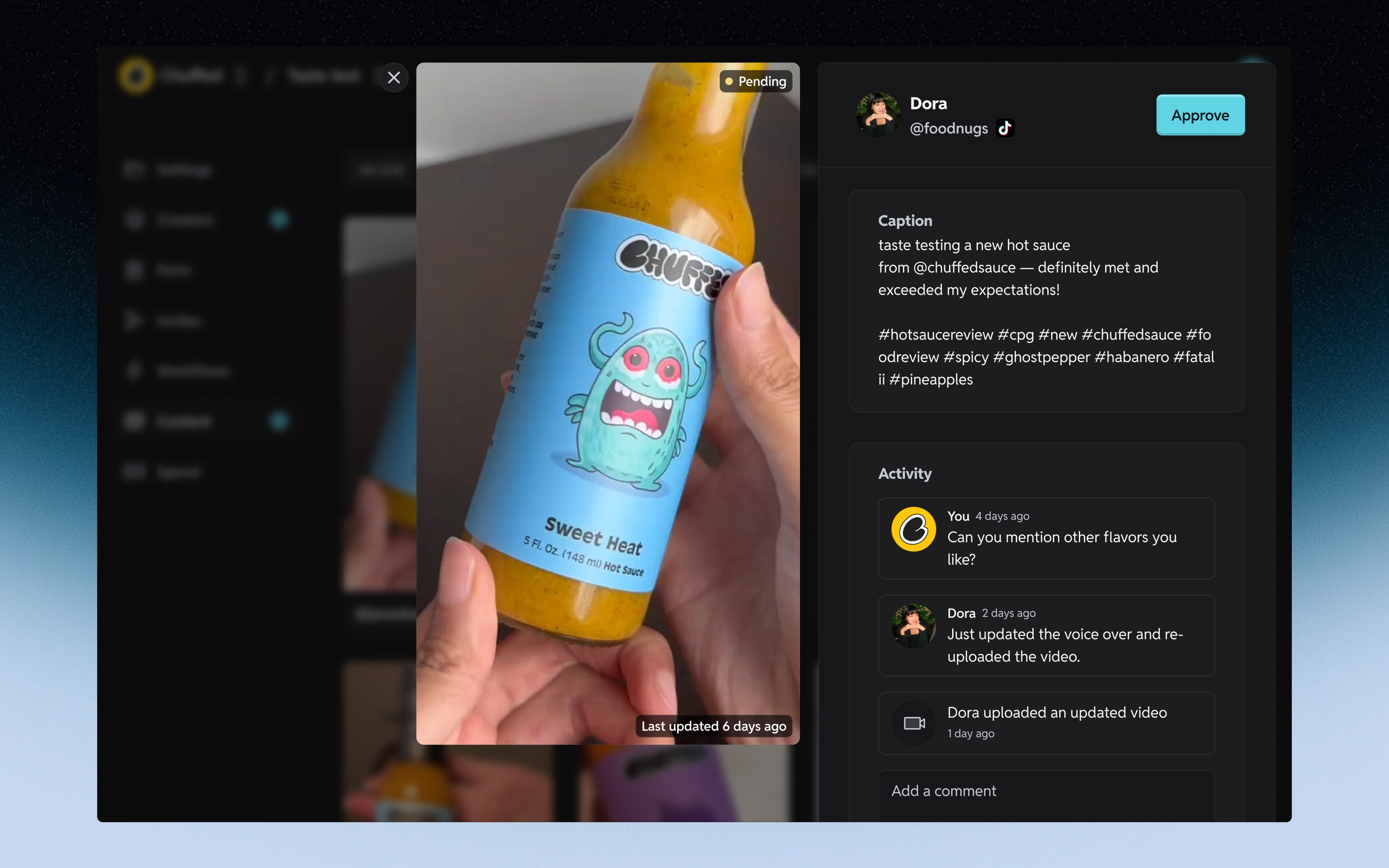
Before we focused on creator search, I designed tools for creator applications, content review, and payments.